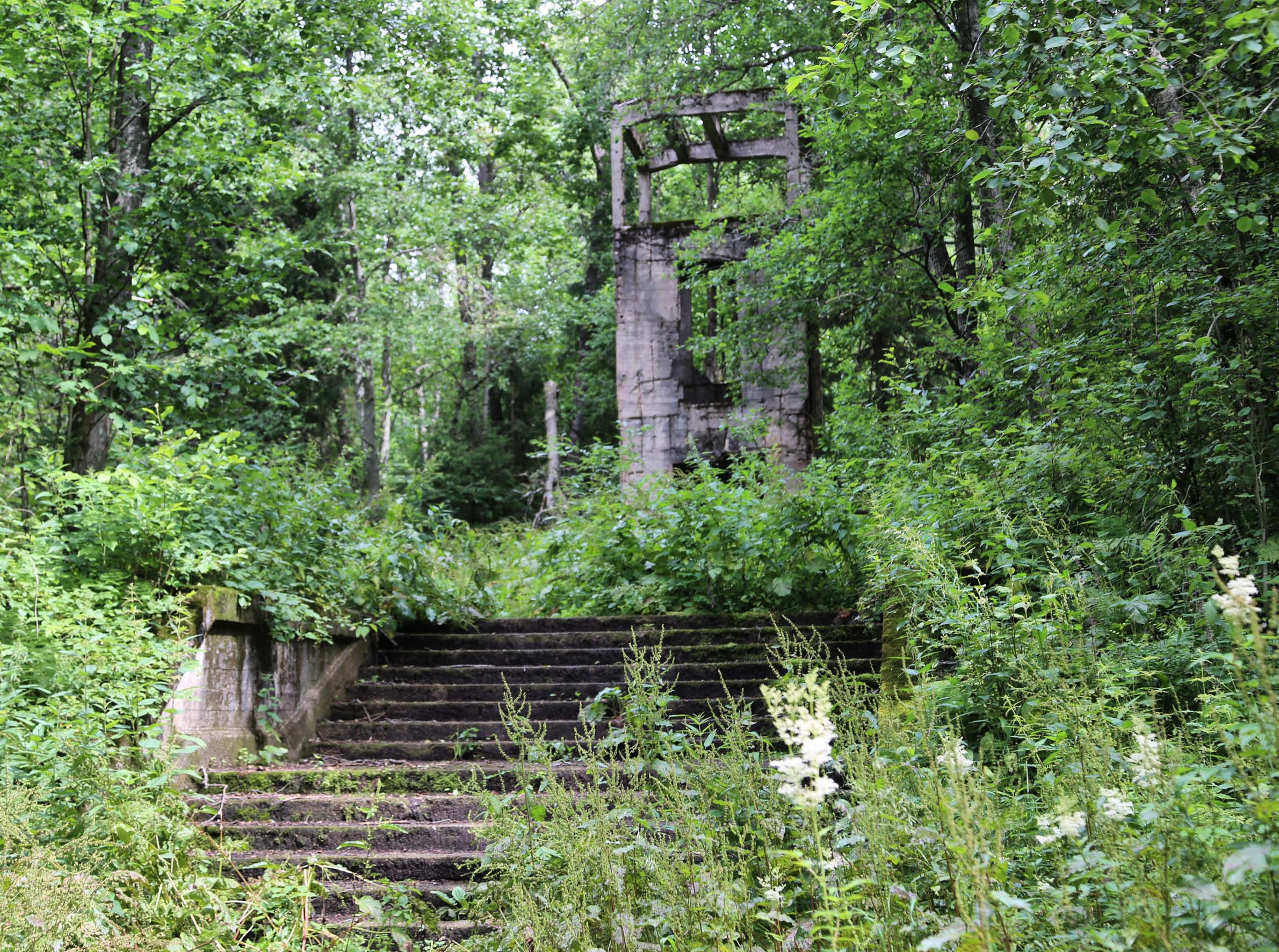
Zavetnoye Estate of Mikhail Tokarsky


The Zavetnoye Estate is located on the 37th km of Okulovka-Kresttsy Motorway, 500 m from Maly Borok.
It was known back in the times of Catherine the Great, when it was a small farmstead in the forest. In the mid-19th century, the area belonged to an unknown settler, and to Nadezhda Dobrova in the early 20th century.
In 1914, Zavetnoye was bought by Russian engineer and architect Mikhail Tokarsky (1868–1941/42), who had the estate completely renovated using reinforced concrete for artistic purposes.
After buying Zavetnoye, Mikhail Tokarsky quickly built two two-storey houses there, as well as two wings, a chapel, a dam on the Talets stream, a water tower, a greenhouse, a sauna, a bathhouse, a laundry room, gazebos, and a dollhouse. In time, a summer theatre with 100 seats was added, where actors from St Petersburg used to perform. Where was built The estate had running water, an electricity generator, a hydraulic ram for lifting water, steam heating, and electric lighting.
The entire territory was surrounded by a net fence. The fence posts were decorated with an ornamental pattern and figurines.
There was a small plant on the estate. During World War I, explosive and shrapnel stoppers were produced there. After the February Revolution, Tokarsky gave the plant and estate to the workers.
In 1920, it was suggested that the Zavetnoye Estate should become part of the Peterhof arts foundation.
During the Great Patriotic War, soldiers stayed at the estate, and later the house was dismantled.
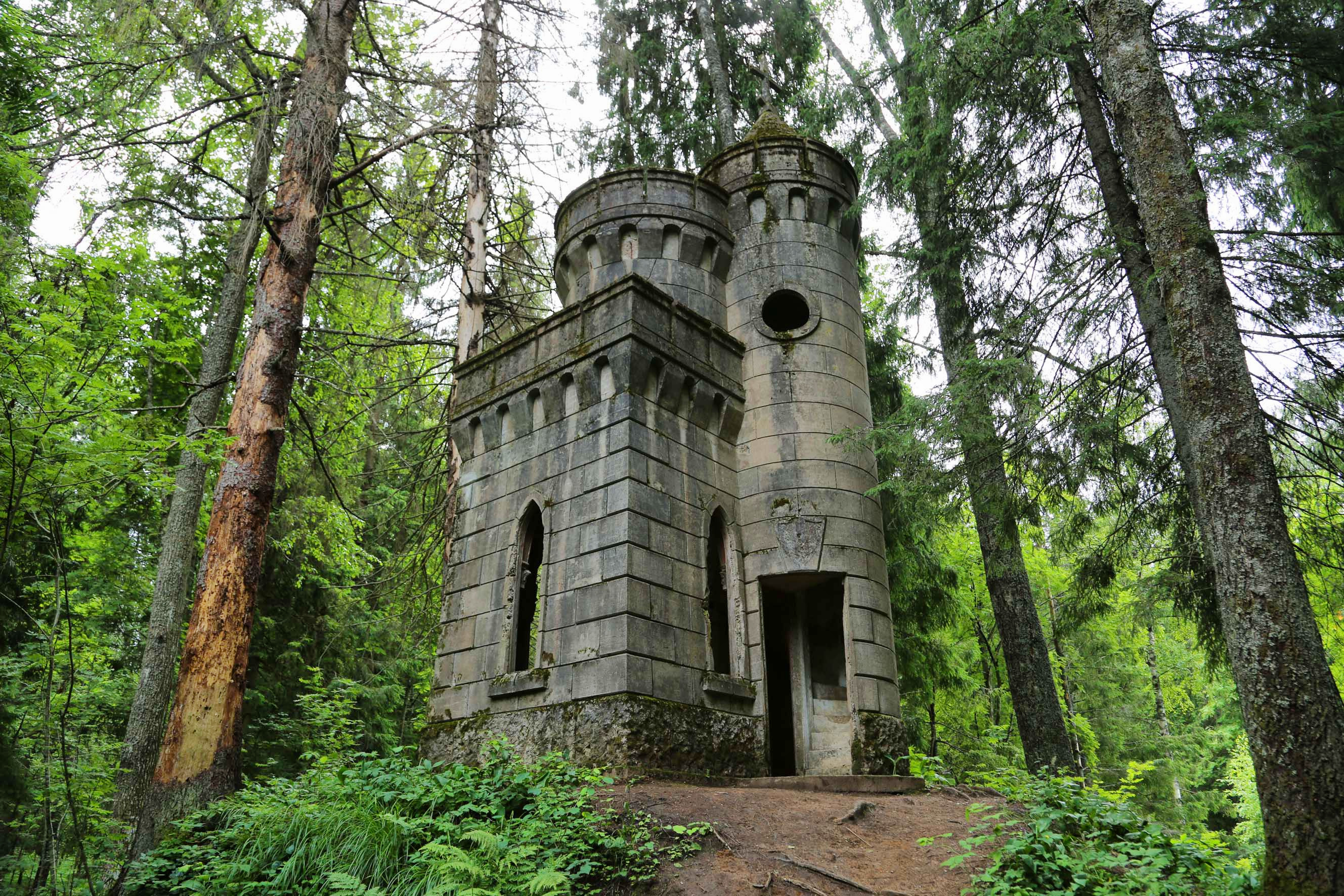
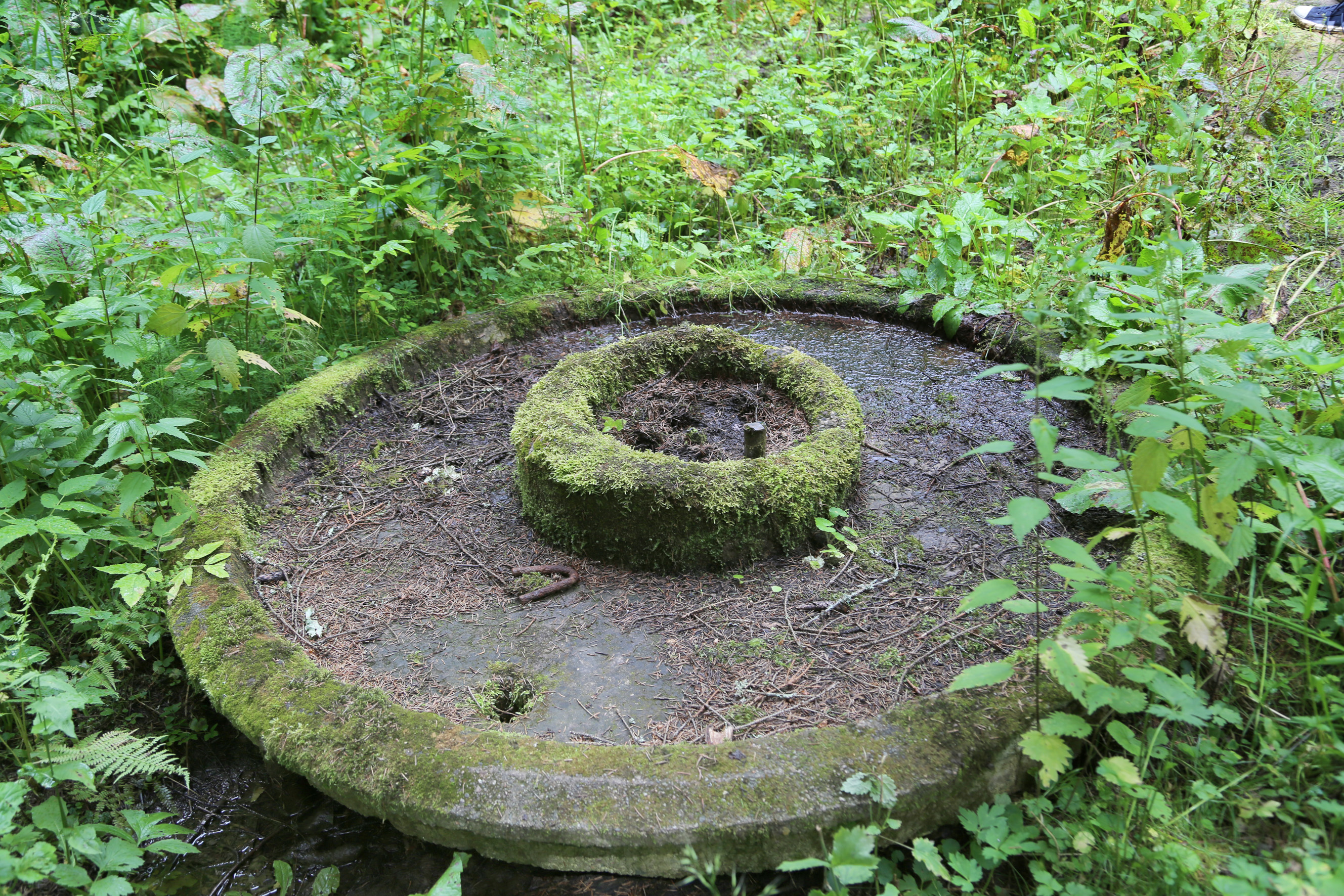
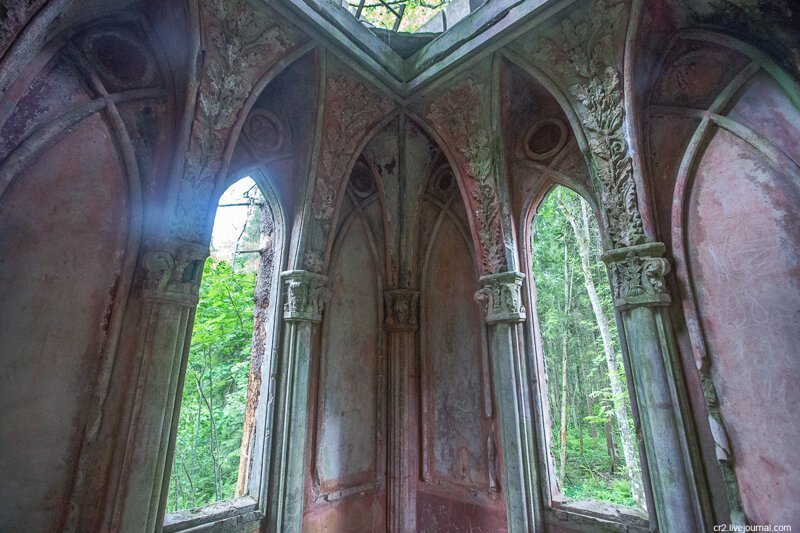
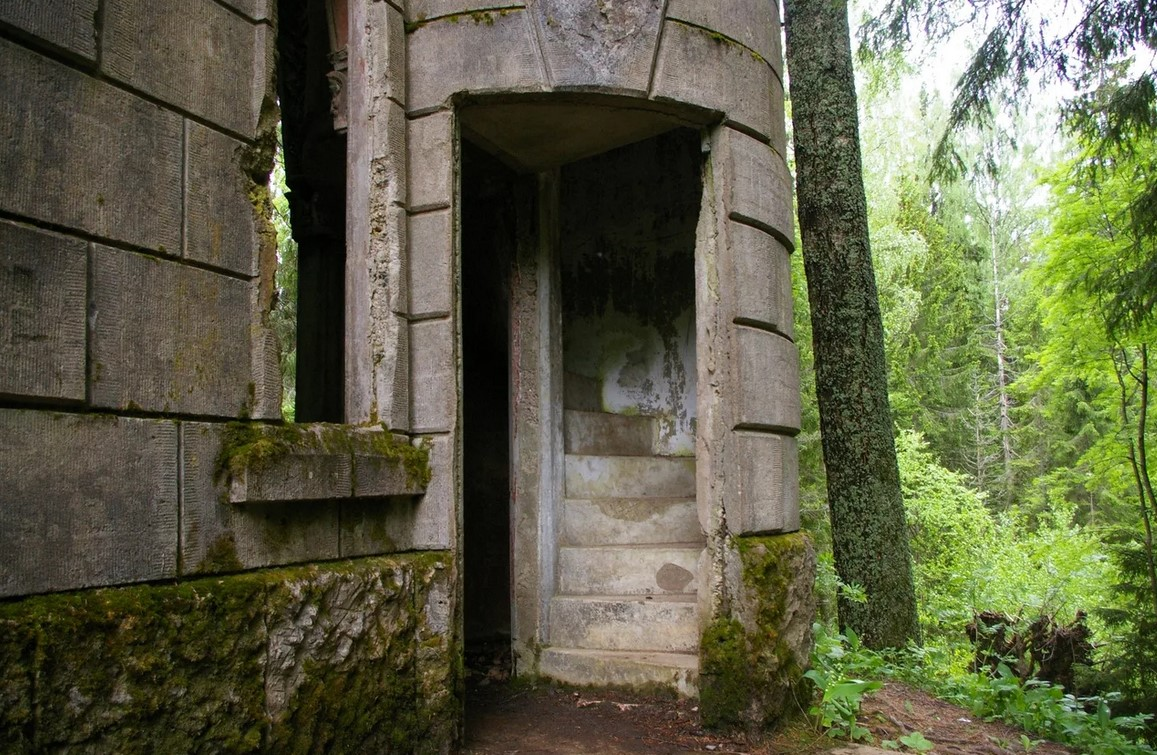
Today, in addition to the chapel, visitors to Zavetnoye can see the forged entrance gate without leaves and the reinforced concrete frame of the water tower, which once fed the fountain system. The two-flight park staircase leading from the house to the stalls, with a round bowl of the fountain in the middle, has also survived. Visitors can go down to an overgrown stream, where they can find the concrete steps of the bathhouse, and further along the stream there is a reinforced concrete dam with an overgrown reservoir.
However, despite the ruins, even today the estate, which imitated Versailles and Peterhof, has great architectural and artistic value as a rare example of reinforced concrete estates in Russia.
Усадьба Заветное находится недалеко от деревни Малый Борок, в направлении 37 километра трассы Окуловка-Крестцы. О ней было известно еще во времена правления Екатерины Второй. В тот период усадьба была маленьким лесным хутором. В XIX веке владельцем был неизвестный мужчина, в начале XX века усадьба перешла в руки Н.Г. Добровой.
Российский архитектор и инженер Михаил Токарский в 1914 году выкупил имение. После этого он занялся глобальной перестройкой Заветного. За небольшой период времени он построил два 2-этажных дома, два флигеля, часовню. Также здесь появились ворота, плотина с водохранилищем у ручья Талец и водонапорная башня. Затем на территории усадьбы были построены оранжерея, баня, прачечная, беседки для отдыха и даже кукольный домик.
Спустя годы в этом месте организовали летний театр, где выступали артисты из Санкт-Петербурга. Территория по периметру была обнесена сетчатым забором, а на столбах красовались статуэтки с орнаментом.
Когда началась Первая Мировая война, при усадьбе появилась фабрика, где стали производить фугасные пробки. После революции в феврале Токарский решил передать фабрику и усадьбу рабочим. В годы ВОВ здесь жили солдаты.
Сейчас на месте Заветного остались часовня и въездные кованные ворота без створок. Сохранились и части водонапорной башни, и парковая лестница, которая ведет в партер с закругленной чашей фонтана. Ближе к берегу заросшего ручья видны полуразрушенные ступеньки купальни.
Несмотря на значительные разрушения усадьбы, она остается архитектурным памятником с художественной ценностью, как один из самых редких образцов усадебного железобетонного строительства в РФ.